Mask & FormExplore the Journal

Character, ornament and visual storytelling

The Art Behind the Mask

Explore how shape, expression, texture and light transform a mask into a memorable character.

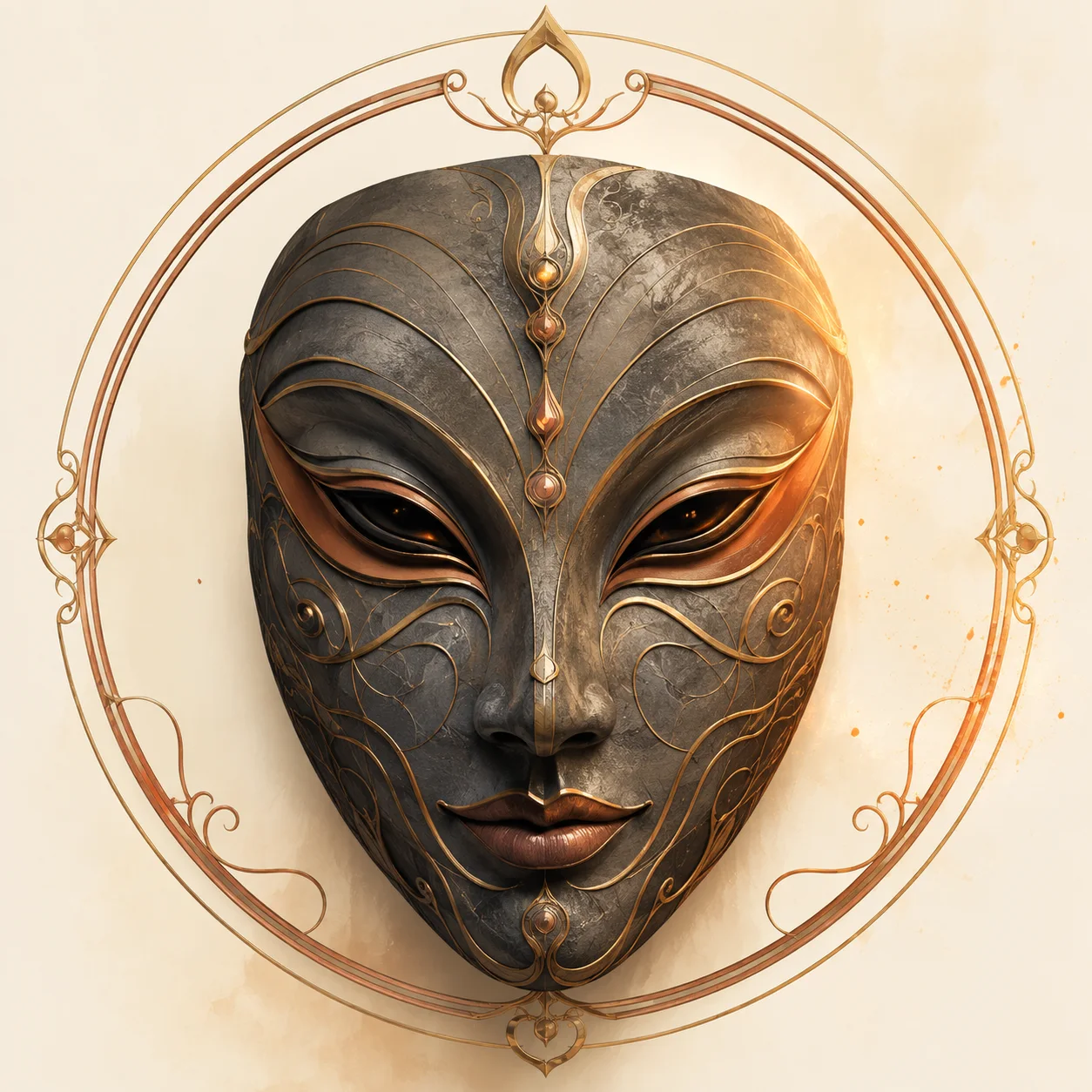
Original contemporary fantasy mask concept with graphite surfaces and copper ornament inside a circular frame
Contemporary concept illustration. AI-generated for this editorial draft, 2026; no historical origin is claimed.

Three editorial collections

Read the mask from edge to light

Move from character silhouette to ornament, then see how the stage changes both.

MasksMasks & CharacterStudy silhouette, facial proportion and expression as practical tools for building a readable stage character.Explore collection ↗OrnamentOrnament & DetailFollow symmetry, repetition, line direction and surface treatment without assigning unsupported cultural meanings.Explore collection ↗StageLight & StageSee how color, angle, contrast and surroundings change the way a designed mask reads in performance.Explore collection ↗

Featured stories

Design decisions, made visible

Six original essays connect formal analysis, stage practice and transparent source work.

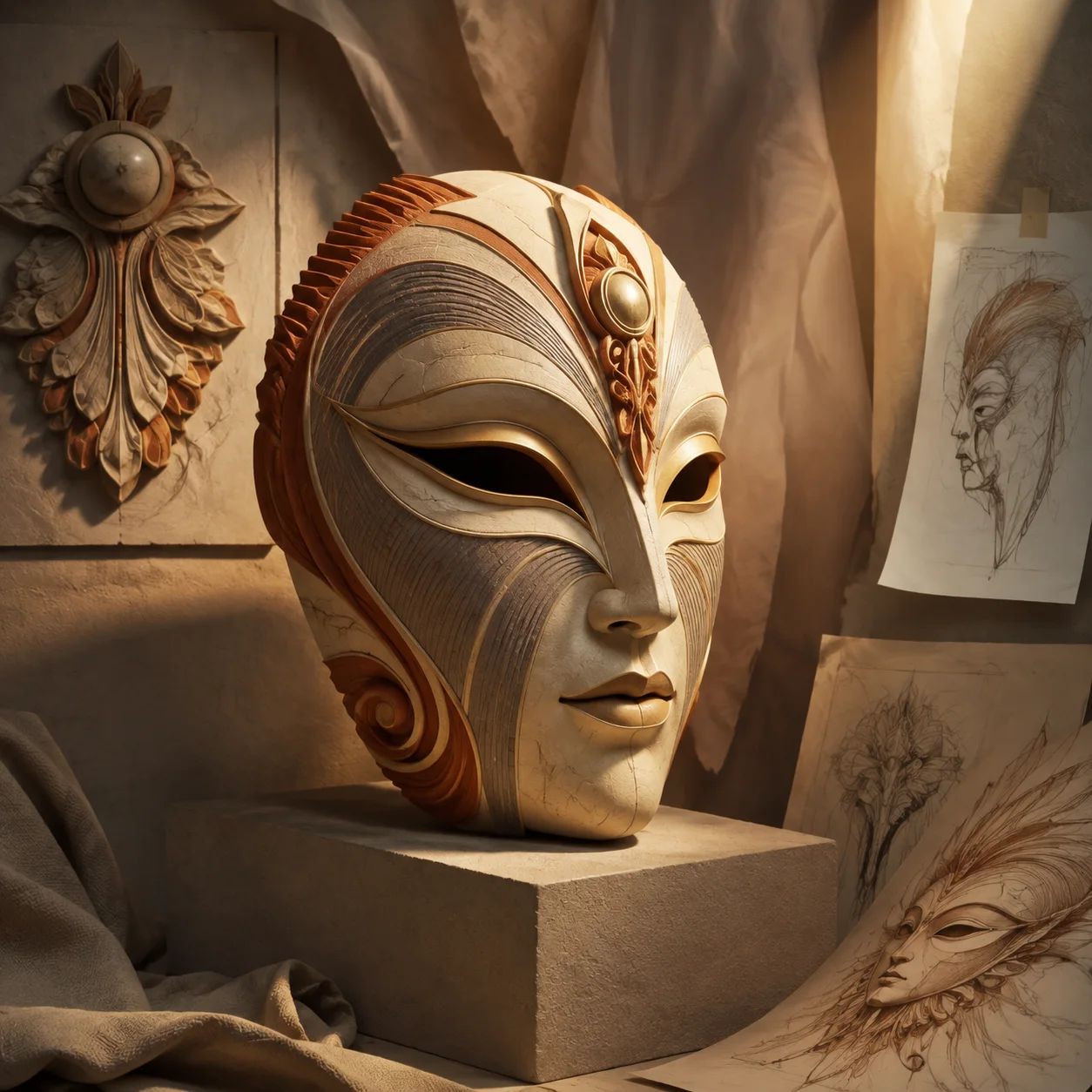
Contemporary mask study used to identify silhouette, eye shape, ornament, texture and lighting
Original contemporary design study. Formal analysis only; not a cultural or psychological interpretation.

Anatomy of a mask

Seven choices build one face

Silhouette

The outer contour establishes mass and remains visible at distance.

Brow & eye shape

Angles and openings create direction without guaranteeing a fixed emotion.

Facial proportions

Landmarks measured from a central axis make deliberate variation easier to see.

Central ornament

One vertical motif anchors the forehead and organizes secondary lines.

Surface texture

Fine cracks and grooves suggest an imagined material; they do not prove one.

Color palette

Graphite quiets the field while copper and muted gold mark focal edges.

Lighting

A warm side source reveals relief and leaves enough shadow to preserve depth.

Design approaches compared

Three methods, three priorities

No approach is ranked. Each solves a different visual and production problem.

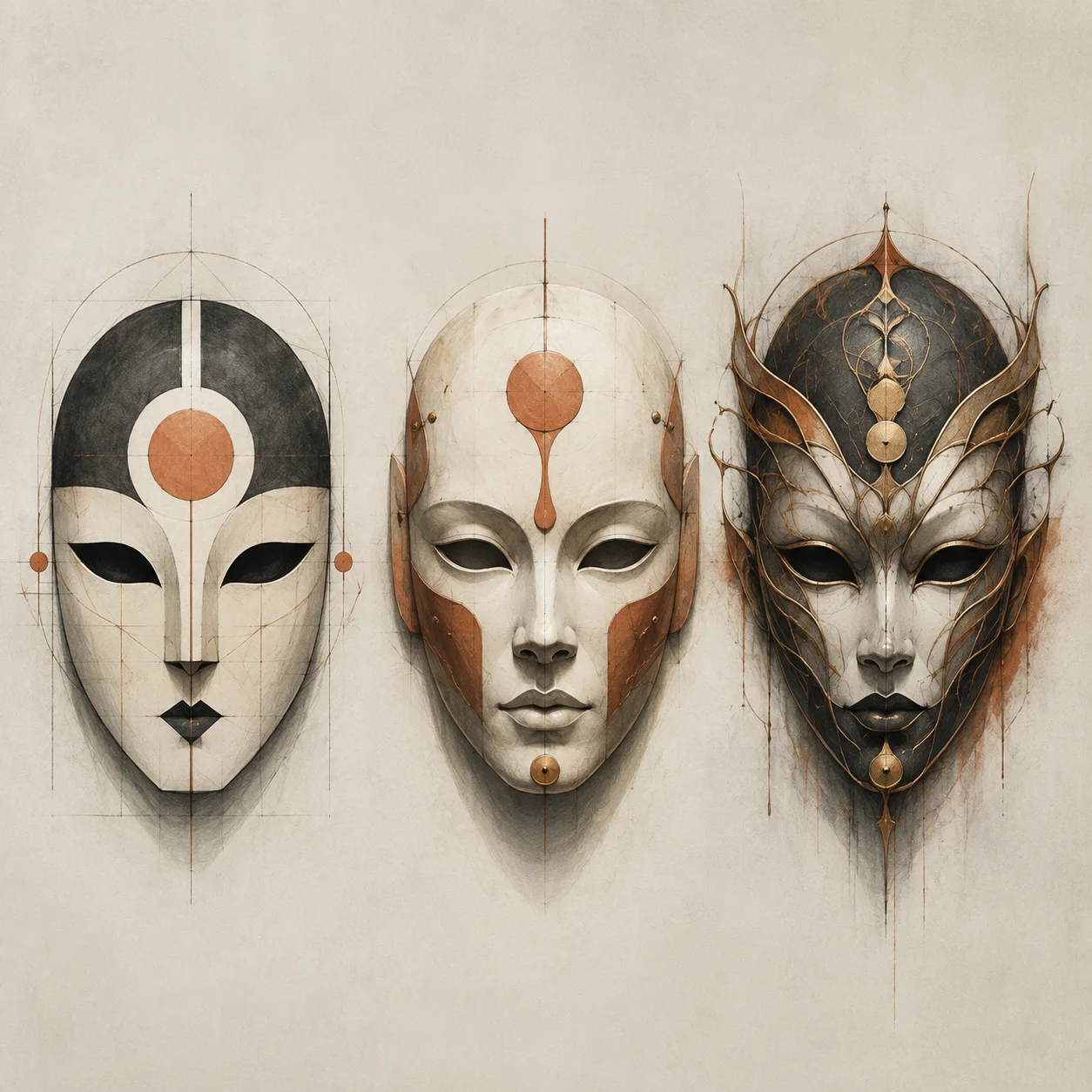
ApproachVisual FeaturesRole of TextureIllustrated Example
Minimal Graphic MaskClear outline, few large planes and controlled negative spaceTexture is reduced so proportion and edge remain primaryMinimal study, left mask in the silhouette sheet
Sculptural Stage MaskModeled brow, cheek and edge intended to respond to changing viewpointsSurface depth and finish interact with real light; fabrication must be testedSculptural study, center mask in the silhouette sheet
Digital Fantasy MaskLayered ornament, amplified silhouette and atmospheric illuminationRendered grooves and stone-like surfaces are visual simulation, not evidence of a physical objectOrnate study, right mask in the silhouette sheet

From sketch to stage

A concept becomes useful through testing

Research sets boundaries. Silhouette establishes the character. Material samples and light tests reveal what the drawing cannot. Documentation preserves the decisions.

Read the full process ↗
  1. BriefDefine the character’s stage function and viewing distance.
  2. SilhouetteTest several small outlines before committing to detail.
  3. TurnResolve front, profile and three-quarter views.
  4. MaterialTest safe samples with qualified production practitioners.
  5. LightCheck value, color and reflection in the intended venue.
  6. ArchiveCredit real contributors and retain dated production records.

Research principles

Describe first. Verify next. Interpret last.

We separate observable form from documented history and from present-day interpretation. Historical claims rely on primary records, museums and institutional publications.

The images in this edition are original generated studies. They are not photographs, reconstructions, finished stage objects or evidence of a cultural tradition.

Editorial policy ↗

FAQ

What this journal is—and is not

What does Mask & Form cover?

The journal examines contemporary mask illustration, stage-character development, ornament, surface treatment and lighting. Historical examples appear only when a traceable collection or institutional source supports the discussion.

Are the featured masks historical or contemporary?

The three lead images are original AI-generated contemporary concept illustrations. They are not museum objects, reconstructions or evidence of a cultural tradition.

Which images show physical objects?

None of the images hosted in this draft documents a physical object. When an article discusses a real artifact or stage design, it links to the holding institution rather than republishing the image.

Where can I find an article’s sources?

Every article ends with the references used for its factual framework. The Sources & Image Credits page also lists the full set and explains the illustration credits.

Can I reuse an illustration?

Not without permission from the verified rights holder. Visibility on this website does not grant reproduction, adaptation or commercial-use rights.

How can I contact the editor?

The owner must add and test a monitored editorial address before publication. Until then, [CONTACT_EMAIL] remains visible to show that no working inbox has been claimed.

About the publication

For readers who want craft and context together.

Mask & Form is an independent editorial draft about contemporary character design, ornament and stage image-making. It claims no museum partnership, workshop service or anonymous expert review.

AI-assisted editorial draft · human editor pending

How the journal works

Selected references

  1. National Gallery of ArtThe Elements of Art

    A museum teaching framework for discussing color, line, shape, form and texture as observable visual elements.

  2. Victoria and Albert MuseumCostume — Explore the Collections

    Overview of the V&A Theatre and Performance costume and accessory collections, spanning stage and screen practice.

  3. Victoria and Albert MuseumCapturing Performance

    Curatorial explanation of how costumes, scripts, set designs, recordings and traces of use document performance.

  4. University of MarylandLighting Design of Am I Black Enough, Yet?

    A university repository record describing the research images, plot, cue track and production documentation used in a lighting-design thesis.

View all sources and image credits ↗